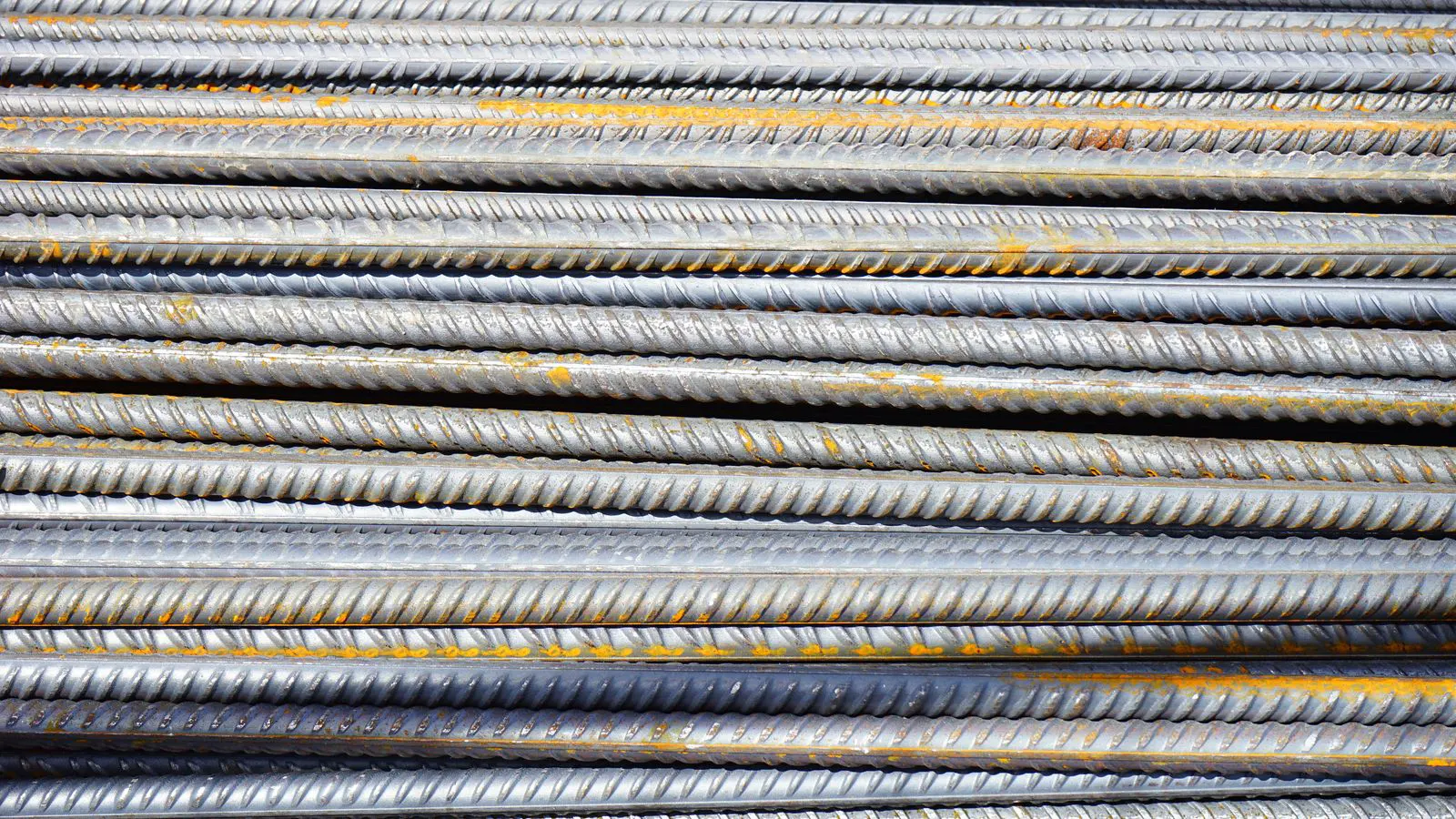
What Is High-Strength Rebar and How It Differs From Standard Grade
High strength rebar offers higher yield strength and better ductility than standard grade. It uses alloying elements and heat treatment to improve load capacity. The choice affects cost, handling, and structural performance in reinforced concrete.
- High strength rebar reaches higher yield points than standard grade, allowing thinner sections or longer spans.
- Alloying elements like manganese and vanadium raise strength but can affect weldability and corrosion resistance.
- Sourcing depends on project load requirements, available local mill capabilities, and long-term durability needs.
- Verify certification documents to confirm the actual grade, not just the nominal size.
- Higher strength does not always mean better for every application; ductility and cost must be balanced.
What Makes Rebar High Strength
Standard grade rebar is typically carbon steel, relying on carbon content and basic alloying elements like manganese to reach common yield strengths in the 400 to 500 MPa range. High strength rebar pushes beyond this by introducing additional alloying elements such as vanadium, titanium, niobium, or chromium, and sometimes through heat treatment. The result is a bar that can sustain higher loads before yielding.
The difference is not just about a higher number on a data sheet. A 700 MPa grade, for example, can carry significantly more force per square millimeter than a 400 MPa grade. This lets engineers reduce bar counts or use smaller diameters in the same member, which changes formwork, rebar spacing, and even the concrete mix requirements.
When you specify a grade, you are choosing a balance between load capacity, workability, and long-term durability. High strength rebar is not inherently “better.” It is a tool that fits specific design goals.
How the Steel Is Made
Standard grade rebar is produced through conventional rolling. The steel melt is cast into billets, then rolled into bar shapes. The chemistry is relatively simple. Carbon and manganese do the heavy lifting.
High strength grades often use microalloyed steel. Small additions of vanadium, titanium, or niobium form fine precipitates inside the grain structure. These precipitates block dislocation movement, which raises yield strength without making the bar brittle. Some mills also use controlled cooling or heat treatment to refine the microstructure further.
This process affects how the bar behaves under load. A high strength bar may have a more defined yield point, or a more gradual transition into plastic deformation depending on the alloying system. It may also have different elongation values, meaning it can stretch further before breaking.
The manufacturing method also influences surface condition. Some high strength bars have a slightly different oxide layer or surface finish. This matters for corrosion resistance, especially in aggressive environments.
Key Technical Differences
The table below summarizes the main differences between standard and high strength grades. These are general ranges. Actual values depend on the specific mill, grade, and production method.
| Property | Standard Grade (400-500 MPa) | High Strength Grade (600 MPa and above) |
|---|---|---|
| Yield Strength | Lower, typically 400 to 500 MPa | Higher, 600 to 1000 MPa or more |
| Alloying Elements | Carbon, manganese, silicon | Adds vanadium, titanium, niobium, chromium |
| Ductility | Good elongation, usually 20% or more | Varies, may be lower or higher depending on grade |
| Weldability | Generally good | Can be more challenging, requires preheat or postheat |
| Corrosion Resistance | Standard, depends on coating | May vary, some grades resist chloride better |
| Cost | Lower per ton | Higher per ton, but may save material overall |
The yield strength jump is the most obvious difference. A 650 MPa grade can carry roughly 30% more load than a 400 MPa grade at the same cross-section. That number drives the engineering decision.
Ductility is the less obvious but equally important factor. A bar that is very strong but brittle can fail suddenly with little warning. A bar with good ductility will deform plastically, giving visible signs of distress before breaking. For critical structures, ductility is often as important as the yield number.
How This Affects Sourcing Decisions
When you specify high strength rebar, you are making a chain of decisions that ripple through the project.
First, the design changes. Engineers may reduce the number of bars or choose smaller diameters. This affects the rebar schedule, the cutting and bending shop, and the on-site placement. A 20 mm bar in a standard grade design might become a 16 mm bar in a high strength design. The difference is small on paper, but it adds up across a full structure.
Second, the supply chain shifts. Not every local supplier stocks high strength grades. You may need to order from a larger mill or a specialized distributor. Lead times can be longer. Pricing is often higher per ton, but the total cost of the rebar package may be lower if you use less material.
Third, the quality control requirements change. You need to verify the actual grade, not just the nominal size. Request mill test certificates that confirm yield strength, elongation, and chemical composition. Check for any special requirements for weldability if the bars will be welded on site.
Fourth, the handling and storage may differ. Some high strength bars are more sensitive to bending radii or impact damage. A bar that is dropped from a height may crack or deform in a way that a standard grade bar would not. Plan your handling and storage accordingly.
A Worked Example in Plain Words
Imagine a two-way slab in a parking structure. The original design used 400 MPa rebar at 200 mm spacing. The engineer wants to reduce the number of bars to simplify placing and reduce congestion.
The engineer switches to a 650 MPa grade. The same 200 mm spacing now carries a higher load. The engineer can reduce the bar diameter from 20 mm to 18 mm and still meet the design loads. The total steel tonnage drops. The rebar shop cuts fewer bars. The on-site crew places a lighter bar, which is easier to handle.
The cost per ton of the 650 MPa bar is higher. But the total rebar cost may be lower because there is less steel. The formwork stays the same. The concrete mix does not need to change for strength, but the engineer may adjust the slump because the smaller bar changes the cover and spacing.
This is the type of decision that happens in real projects. It is not about using the strongest steel available. It is about matching the grade to the design intent, the cost target, and the construction reality.
Common Mistakes and How to Avoid Them
The most common mistake is treating high strength rebar as a simple swap. You cannot just substitute a 650 MPa bar for a 400 MPa bar without checking the design. The higher strength changes the ductility behavior, the deflection limits, and the crack control requirements.
Another mistake is ignoring weldability. If the rebar will be welded, you need to know if the grade requires preheating, postheating, or specific welding procedures. Some high strength grades are hard to weld. Using the wrong procedure can cause cold cracking or reduced strength at the weld.
A third mistake is not verifying the grade on delivery. The mill test certificate says 650 MPa. The supplier says it is 650 MPa. But the actual bars may be a different grade. Check the heat number, the chemical composition, and the mechanical properties. If anything is off, reject the delivery.
Finally, do not assume that higher strength always means better corrosion resistance. Some high strength grades are formulated for strength, not durability. In marine or de-icing salt environments, you may need a grade with specific corrosion resistance properties. Check the environmental requirements before finalizing the grade.
When to Use Standard Grade
Standard grade rebar is not a fallback. It is the right choice for a large number of projects. If the loads are moderate, the spans are short, and the budget is tight, a 400 or 500 MPa grade is often the most cost-effective option.
Standard grade rebar is widely available. Every supplier stocks it. It is easy to weld. It has predictable behavior. For residential buildings, small commercial structures, and general infrastructure work, it is the default for a reason.
The decision to use high strength rebar should be driven by a clear engineering benefit. If the design does not require the higher yield strength, you are paying for a capability you do not need.
How to Verify the Grade You Receive
When the rebar arrives, do not just check the size. Check the grade.
First, look at the mill test certificate. It should list the yield strength, ultimate tensile strength, elongation, and chemical composition. Match the heat number on the certificate to the heat number on the bar tags. If they do not match, stop.
Second, check the bar tags. They should show the grade, the size, the heat number, and the mill identification. If the tag is missing, faded, or does not match the certificate, ask the supplier for a replacement or a re-issue.
Third, consider a third-party inspection. For critical projects, an independent inspector can verify the grade on site. This is especially useful when the supplier is new to the project or when the grade is not commonly used in your region.
Fourth, keep the documents. You will need them for the as-built records. If there is a dispute later, the mill test certificate is your proof of what was delivered.
The grade is not just a number. It is a set of properties that determine how the structure will perform over its lifetime. Get it right at the source, and you avoid problems that are much harder to fix later.
Frequently asked questions
Can I substitute high strength rebar for standard grade without changing the design?
No. Substituting a higher grade changes the yield strength, ductility, and deflection behavior. The design must be revised to account for the new properties.
Is high strength rebar more expensive to use overall?
The per-ton cost is higher, but the total cost may be lower if you use less material. The net cost depends on the design, the span, and the quantity.
Do high strength bars corrode faster than standard grade?
It depends on the grade. Some high strength grades are formulated for strength only, while others include elements that improve corrosion resistance. Check the specific grade for your environment.
How do I know if my supplier can deliver a specific high strength grade?
Ask for their product list and recent mill test certificates for that grade. Confirm the lead time and whether the grade is stocked or made to order.
What documents should I keep for high strength rebar deliveries?
Keep the mill test certificate, the delivery note, the bar tags, and any third-party inspection reports. Match the heat numbers to verify the grade.