Solid Round Bar vs Wire: Which Is Right For Your Project?

Solid round bar provides high compressive strength and structural stability, while steel wire offers flexibility and ease of bending. The right choice depends on load requirements, spacing, and installation constraints.
- Solid round bar excels in high-compression zones and long-span applications.
- Steel wire is preferred for dense reinforcement and tight bending radii.
- Selection hinges on load type, spacing, and access for installation.
- Always verify material certificates and dimensional tolerances before use.
Understanding the Core Difference in Form and Function
Solid round bar and steel wire are often grouped under the same heading in material take-offs, but they behave differently under load. Round bar is a single, continuous cylinder with a defined diameter, typically ranging from a few millimeters to over a hundred millimeters. Wire is also cylindrical, but it is produced in much smaller cross-sections, often coiled for easy handling and placement.
The distinction is not merely cosmetic. A 32 mm round bar carries a different stress profile than a 12 mm wire, even if both are made from the same grade of steel. The form factor changes how the material interacts with concrete, how it is bent, and how it resists cracking. Choosing between them is a decision about structural behavior, not just material cost.
The manufacturing process dictates these differences. Round bar is usually hot rolled, a process that compacts the metal and creates a dense, homogeneous structure. Wire is typically drawn through a die, which elongates the metal and refines the grain structure. This drawing process allows wire to be produced with tighter tolerances and higher surface finish, which is critical for applications where corrosion resistance or precise dimensional control is required.
In a typical construction site, the handling of these two materials differs significantly. Round bar is often cut to length on site using a rebar saw or a hydraulic cutter. Wire is usually delivered in coils and cut using a wire cutter or a guillotine. The physical handling of the material also impacts the installation speed. A crew can place a large quantity of wire in a thin slab in a fraction of the time required to place large bars, but the tying process for wire is more labor-intensive due to the smaller size.
When Solid Round Bar Is the Right Choice
Round bar is the default selection for primary structural elements. In columns, beams, and thick slabs, the compressive forces are high, and the spacing between reinforcement members can be wide. A solid bar handles these loads efficiently because its cross-sectional area is large and its stiffness is high.
Consider a reinforced concrete column. The vertical load is carried primarily by the compressive strength of the concrete and the steel reinforcement. If the load is significant, designers specify multiple large-diameter bars, such as 32 mm or 40 mm, spaced around the perimeter. Wire is rarely used here because its small diameter would require an impractical number of pieces to match the area of a few large bars. The installation process would be slow, and the risk of misplacement would be high.
Round bar also performs well in shear connectors and anchor bolts. These applications demand high tensile strength in a compact form. A solid bar can be threaded or welded with precision, whereas wire is difficult to thread and prone to kinking if bent incorrectly. The ability to weld large bars directly to other structural steel members is another advantage in hybrid structures, such as steel-concrete composite floors or shear studs.
In post-tensioning applications, large diameter bars or tendons are used to apply high compressive forces to the concrete. While specialized tendons are often used, large diameter bar can serve as a temporary or permanent anchor in specific designs. The stiffness of the bar ensures that the tendon does not sag under its own weight, maintaining the correct line of thrust.
When Steel Wire Is the Right Choice
Steel wire shines in situations where density and flexibility matter. In thin slabs, wall panels, and precast elements, the reinforcement spacing is tight. Wire, with diameters of 4 mm, 6 mm, or 8 mm, can be packed into narrow spaces without interfering with the concrete pour.
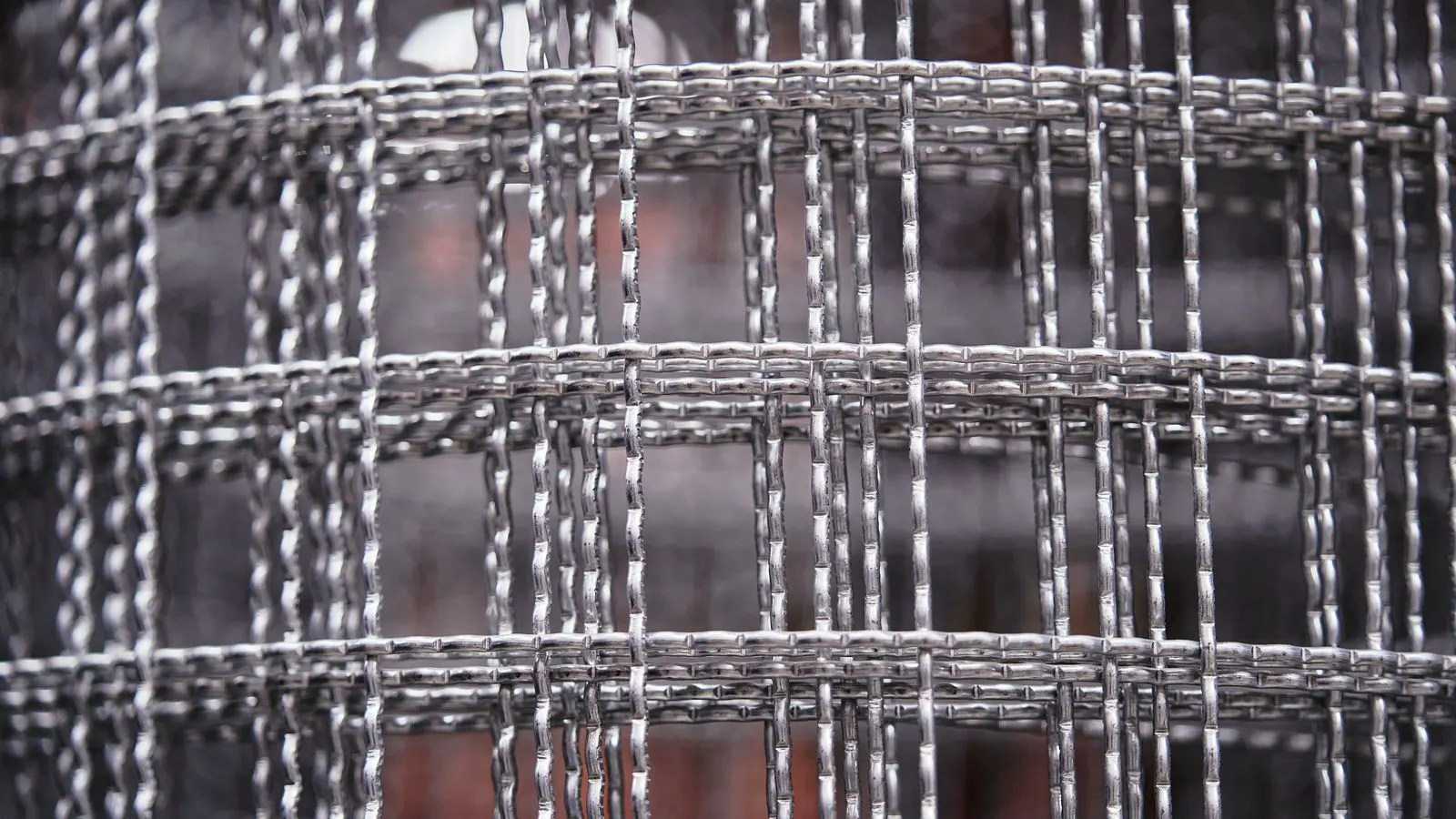
Wire is also the standard for mesh reinforcement. Welded wire mesh, which consists of small wires welded at intersections, provides uniform crack control over large surface areas. Using solid bars to replicate this mesh would be labor-intensive and would create voids in the concrete that reduce structural integrity. The preformed nature of the mesh allows for rapid installation, which is critical for projects with tight schedules.
Another major advantage of wire is its bendability. Engineers often require reinforcement to be bent at tight angles to form cages or hooks. Wire can be bent around small radii without significant loss of strength. Round bar, while bendable, requires larger radii to avoid cracking the material or inducing residual stresses. This makes wire the practical choice for complex geometries and precast units.
In high-density structures, such as bridge decks or thin-shell foundations, wire allows for a higher volume of reinforcement within the same concrete section. This increases the overall stiffness and reduces the deflection under load. The smaller diameter also allows the wire to conform to the shape of the formwork, ensuring uniform cover and better bond with the concrete.
Comparison of Structural Performance and Installation
The table below summarizes the key trade-offs between solid round bar and steel wire for common reinforcement applications.
| Option | Best for | Limitations |
|---|---|---|
| Solid Round Bar | High-compression columns, primary beams, shear connectors | Difficult to place in tight spaces, high cost per meter, limited bendability |
| Steel Wire | Thin slabs, wall panels, precast elements, mesh reinforcement | Low compressive capacity per piece, requires high quantity for large loads, prone to kinking |
| Welded Wire Mesh | Surface crack control, floor slabs, non-structural walls | Limited tensile strength, not suitable for primary structural loads |
| High-Strength Wire | Post-tensioning, high-load precast elements | Specialized handling required, sensitive to corrosion if coated |
The installation process also impacts the final quality of the structure. Large bars require more space for tying and can interfere with the flow of concrete around the reinforcement. If the bars are too close together, the concrete may not fill the gaps, creating honeycombing. Wire, with its smaller diameter, allows for better concrete flow and less honeycombing. However, the large quantity of wire means that any deviation in placement or tying can have a cumulative effect on the structural performance.
Impact of Material Grade and Coating
The choice of form factor must be considered alongside the material grade. Standard carbon steel bars and wires are the most common, but high-strength alloys change the calculus. A high-strength wire may carry more load than a standard bar of the same diameter, but it is more sensitive to bending radii. This limits its use in tight corners unless special forming techniques are employed.
Corrosion protection is another factor. Galvanized wire is common in exposed applications, such as fences or agricultural structures. Solid round bar is more often left uncoated for structural concrete, where the concrete itself acts as a barrier. If the environment is highly corrosive, such as in marine structures, the coating choice for wire and bar must be matched to the exposure conditions. Using uncoated bar in a salt-spray environment without proper concrete cover will lead to premature failure.
The material grade also affects the welding properties. Standard carbon steel bars are generally easy to weld, but high-strength bars may require preheating or specific welding procedures to avoid cracking. Wire, due to its smaller size, cools quickly during welding, which can lead to hardening. This is why wire is often not welded in structural applications; instead, it is tied with wire ties.
Cost, Availability, and Supply Chain Considerations
While material cost is often the first thought, the total cost of installation is frequently more significant. Wire is cheaper per meter than a large-diameter bar, but you need many more meters of wire to achieve the same reinforcement area. Labor costs for tying and placing numerous small wires can exceed the cost of tying a few large bars.
Lead times vary by market. Large-diameter bars are standard stock items in most regions. Smaller-diameter wires are also widely available, but specific high-strength grades or special coatings may have longer lead times. In projects with tight schedules, using standard wire and bar reduces the risk of delays. If a design calls for a non-standard diameter, the supplier must produce it, which adds time and cost.
The logistics of transport also play a role. Wire is delivered in coils, which are lightweight and easy to handle. Large bars are heavy and require a crane or a specialized transport vehicle. On site, the storage of wire is more compact, which is advantageous for projects with limited space. However, the weight of the bars means that the foundation of the site must be able to support the load during storage.
Practical Selection Criteria for Engineers
To select between round bar and wire, follow a structured approach. First, identify the primary load path. If the element is in compression, use solid bar. If the element is in tension or requires crack control, wire is often sufficient. Second, check the spacing. If the spacing is less than three times the bar diameter, wire or small-diameter bar is easier to place. Third, evaluate the bending requirements. If the design includes tight bends, specify wire or a high-strength bar with a verified bend radius.
Finally, review the inspection requirements. Solid bar inspection focuses on dimensional accuracy and surface quality. Wire inspection focuses on coil consistency and wire diameter tolerance. Both require material test certificates, but the methods differ. Engineers must ensure that the supplier can provide the correct documentation for the chosen form factor.
The selection process should also consider the long-term performance of the structure. In environments with high humidity or temperature fluctuations, the choice of material grade and coating can significantly impact the lifespan of the structure. Engineers should consult with the supplier to select the most appropriate material for the specific conditions.
Common Mistakes in Material Selection
One frequent error is using wire for high-compression elements. The small diameter creates many tie points, which weakens the concrete around the wire and increases the risk of bond failure. Another mistake is using large-diameter bar in thin slabs. The bar cannot be placed correctly, leading to voids and poor concrete cover.
A third mistake is ignoring the bend radius. Bending a round bar too tightly can crack the outer fibers, reducing its effective strength. Wire is more forgiving, but it can still fail if bent repeatedly. Designers must specify the minimum bend radius for the chosen material to avoid these issues.
A fourth mistake is not considering the availability of the material. Using a non-standard diameter or a specialized coating can lead to delays and increased costs. Engineers should stick to standard sizes and grades whenever possible, unless the design specifically requires a non-standard option.
Final Recommendations for Project Planning
For most structural concrete projects, solid round bar remains the backbone of the reinforcement system. It is the choice for columns, main beams, and heavy slabs. Steel wire is the complement, used for distribution reinforcement, crack control, and precast elements. The best projects use both, selected based on the specific function of each element.
When planning your material take-off, do not treat bar and wire as interchangeable. Calculate the required area, consider the spacing, and assess the installation difficulty. A well-thought-out selection saves time on site and ensures the structure performs as intended.
Frequently asked questions
Can steel wire replace solid round bar in a concrete column?
No. Steel wire lacks the compressive capacity and stiffness required for primary columns. Use solid round bar for high-compression elements.
Is wire stronger than solid bar?
Strength depends on the material grade, not the form. A high-strength wire can have a higher yield strength than a standard bar, but it carries less total load per piece due to its small cross-section.
What is the advantage of using welded wire mesh?
Welded wire mesh provides uniform crack control over large areas. It is ideal for thin slabs and non-structural walls where solid bars are impractical.
How does coating affect the choice between bar and wire?
Coatings are critical in corrosive environments. Galvanized wire is common for exposed structures, while uncoated bar is standard for protected concrete. Match the coating to the exposure.
Can I use a larger bar to reduce the number of tie points?
Yes, but only if the spacing allows it. Using larger bars reduces the number of ties and improves placement speed, but it may increase cost and make bending more difficult.